


 English
 Deutsch
 Español
A Cookie Pan decides how evenly a batch bakes, and many problems blamed on the oven or the dough trace back to the pan itself. Burnt bottoms, pale tops, cookies that stick and trays that buckle in the heat each point to a particular property of the metal. Reading the symptom correctly makes it easier to choose a pan that suits a given kitchen.
Burnt Bottoms and Pale Tops
Dark surfaces absorb more heat
Color changes how a Cookie Pan handles oven heat. Dark and non-stick coated surfaces absorb radiant heat quickly, so the underside of a cookie browns sooner than the top. Light bare metal reflects part of that heat and bakes more gently. Bakers who switch from a light pan to a dark one often cut the oven temperature by about 15 degrees Celsius or shorten the time, otherwise the edges darken before the center sets.
Thickness evens out the heat
Carbon steel conducts heat fast, which gives crisp edges and quick recovery after the door opens. A thin sheet, such as a 0.6 mm pan, heats up quickly and cools quickly, which suits thin crisp cookies and crackers. Thicker steel spreads heat more slowly and gives a gentler result with soft cookies. The right choice follows the recipe, and both types of Cookie Pan have a place in a commercial kitchen.
Warped Trays and Noisy Ovens

Why thin metal buckles
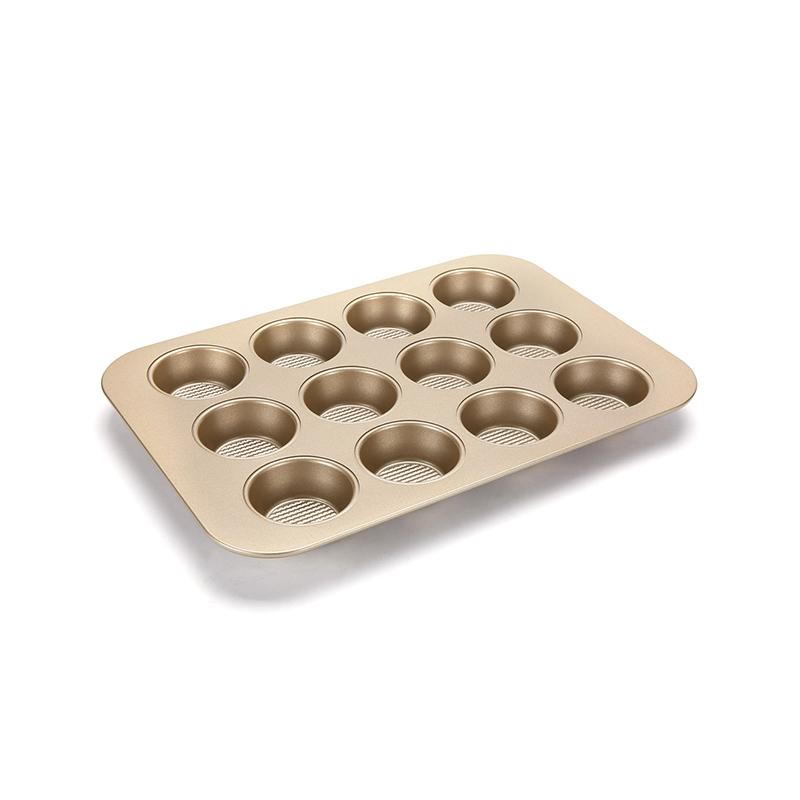
A cold pan placed in a hot oven heats unevenly: the edges warm up quickly and the center lags behind, and the difference bends the metal. Thin sheets often pop or snap as they heat up. Rolled edges or a formed rim stiffen the metal and reduce the effect, while a fully flat sheet with no rim flexes more easily. Textured bases, such as a diamond pattern, add stiffness across the whole surface.
Pans that stay flat
A warped pan tilts the dough, so cookies spread to one side and bake unevenly. Pans that are stamped and rolled with reinforced edges tend to stay flat through many cycles. Washing a hot pan in cold water is a common cause of warping, and letting it cool on a rack before washing helps it keep its shape.
Sticking and Spreading
Non-stick coating releases cookies cleanly and cuts down on the oil or parchment needed. Bare carbon steel needs a light greasing or a liner, and it also builds a seasoned surface with use. Coated pans should be washed with a soft sponge, because abrasive pads scratch the finish and shorten its life.
Rimless and rimmed Cookie Pan styles also behave differently. A rimless sheet lets the baker slide cookies straight onto a cooling rack with a spatula and gives hot air easy access to the edges. A rimmed pan holds back butter and oil, so it is better for sheet pan meals and for recipes that release fat. Many bakers keep both types on the rack.
Handles, Sizes and Oven Fit
Silicone handles give a firm grip when the pan comes out of the oven, and they help when two people share a tight kitchen. Their heat limit should be checked against the baking temperature in use. Sizes of cookie sheets range from about 32 × 21 cm up to roughly 50 × 30 cm, and the pan needs a gap of a few centimeters on each side so air can circulate. A tray that fills the rack from wall to wall blocks the flow and bakes unevenly at the back.
Racks matter too. Baking one Cookie Pan on the middle rack gives consistent results in a home oven. Two pans on separate racks need a rotation halfway through, front to back and top to bottom, so both batches brown evenly.
Stacking, Storage and Shipping
Cookie baking pans nest tightly when the sides are shallow and the corners are formed the same way on each unit, which saves cupboard space in a bakery and carton space for a distributor. Packaging in sets of 12 or 24 keeps freight cost per piece low, and a coated Cookie Pan needs protective sheets between units so the surface is not scratched in transit.
Matching the Pan to the Bake
A pan is a heat tool as much as a container. Dark, thin steel suits crisp, quick bakes, thicker light-colored metal suits soft cookies, and rims or flat sheets suit different handling needs. A buyer who matches the Cookie Pan to the recipe, the oven and the washing routine gets consistent results batch after batch, and that consistency is what a customer notices with every bite.