


 English
 Deutsch
 Español
A Turkey Roasting Pan that does not fit the oven causes trouble on the day the bird goes in, and late November is when home cooks discover this. Thanksgiving and year-end dinners put a large bird into kitchens built for smaller dishes, and a pan that is a few centimeters too wide or too deep can turn the roast into a problem of space.
Measure the Oven Before the Pan
Width and depth
A home oven is a box with a fixed interior, and the usable space is smaller than the label suggests once racks, heating elements and the door seal are counted. Cooks should measure the interior width and depth with a tape. A Turkey Roasting Pan around 46 cm long and 32 cm wide fits many full-size ovens, but handles add to the width, and a pan that touches the oven wall blocks hot air from circulating on that side.
Height between racks
Height matters as much as footprint. A bird sitting on a rack in a 7 cm deep pan needs clear space above the breast, or the skin will brown too fast under the top element. Moving the rack to the lowest position gives extra room, but the bottom heat is then closer, so the cook must watch how quickly the underside colors.
What the Rack Does
Lifting the bird
A V-shaped rack in a Turkey Roasting Pan holds the turkey off the pan floor. Hot air then reaches the underside, and the legs and the lower breast cook at a rate closer to the top of the bird. Without a rack, the part in contact with the metal cooks in its own juices and turns soft.
Separating the drippings
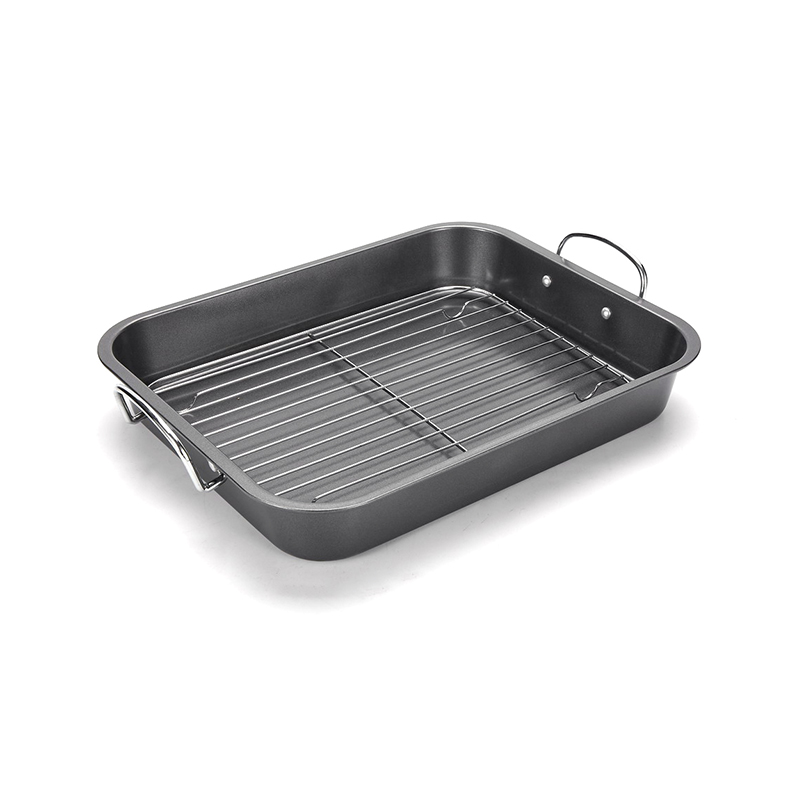
Drippings fall through the rack into the pan, where they can be collected for gravy. A turkey that rests on the rack stays out of that liquid, so the skin keeps its crispness. A roasting pan for turkey that comes with a rack saves buying one separately, and the two should fit each other without wobbling.
Depth Controls Splatter
A shallow Turkey Roasting Pan lets fat spit onto the oven floor, while a very deep pan shields the sides of the bird from heat. Pans of 5 to 7.5 cm in depth suit poultry, with enough wall to contain the drippings and enough opening for air to reach the bird. Larger dimensions suit bigger birds. Basting is easier from a pan with moderate walls, since a baster reaches the liquid without hitting the rim.
Carbon Steel or Non-Stick
A carbon steel Turkey Roasting Pan tolerates the high heat needed to brown poultry and develops a seasoned surface with use. Its bare surface also lets browned bits stick to the bottom, and those bits dissolve into the liquid when the cook deglazes the pan for gravy. Non-stick roasting pans release food and wash easily, but wooden or silicone tools protect the coating, and the fond that forms on non-stick surfaces is thinner. PTFE-free coatings are available for cooks who prefer that option.
Neither material is right for every kitchen. Cooks who make gravy every year often prefer bare steel, while those who roast vegetables and lasagna in the same pan tend to choose a coated one.
Lifting a Hot Bird
A turkey with its stuffing, drippings and pan can weigh well over ten kilograms in total, and it must be moved from the oven to the counter while it is scorching hot. Models with side handles make that move safer, since a cook can grip both sides with oven mitts. Rimmed edges without handles leave little to hold. A Turkey Roasting Pan that flexes under load is a hazard, because the liquid can slosh over the edge, so the steel must be stiff enough to carry the full weight without bending.
The Thermometer Settles It
Whatever pan is used, doneness is judged by temperature, not by time or color. Poultry is safe at an internal temperature of 74 degrees Celsius, measured at the thickest part of the thigh without touching bone. A pan that lets the cook slide a thermometer in easily, with a rack that keeps the bird accessible, makes this check simple. A Turkey Roasting Pan sized to the oven and fitted with a rack lets the bird reach that reading evenly, and a turkey roaster pan with handles lets the cook take it out at the right moment.