


 English
  Deutsch
  Español
 A cookie pan is not the same as a standard baking sheet, though people often use the terms interchangeably. The differences show up in how the pan handles heat, how cookies brown, and how easy it is to move batches in and out of the oven.
Unlike a roasting pan or cake pan, a cookie pan is designed for flat, spread-out baking. The goal is even browning across the entire surface, not containing liquids or supporting tall batters.
Rimless versus rimmed designs
Some cookie pan models have no raised edges at all. Rimless sheets let you slide baked cookies directly onto a cooling rack without lifting each one individually. That saves time when baking multiple batches.
Rimmed versions contain any melted butter or oil that might run off the sides. They also work better for sheet pan meals or roasted vegetables where juices need to stay on the pan. For cookies specifically, a rimless cookie pan gives better air circulation around the edges.
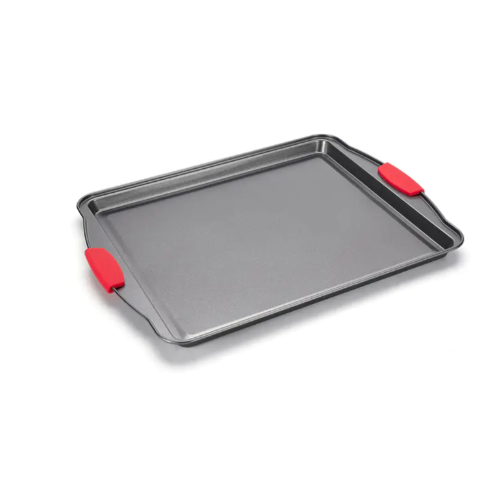
Surface finish and browning
A light-colored cookie pan reflects more oven heat. Cookies bake more slowly and brown less on the bottom. That works well for delicate cookies like shortbread or madeleines where you want a pale underside.
Darker surfaces absorb heat faster. A dark cookie pan produces crispier, darker bottoms. That is ideal for chocolate chip cookies or biscotti where a firm base is part of the texture.
Non-stick coatings on a cookie pan help with release, especially for sticky doughs containing lots of sugar or molasses. Uncoated surfaces require parchment paper or greasing but develop a natural seasoning over time with repeated use.
Material thickness and warping
Thin cookie pan sheets heat up quickly but often warp in the oven. Once a pan twists, dough slides to one side and cookies bake unevenly.
Heavier gauge metal resists warping. A thicker cookie pan takes longer to preheat but holds temperature steadily. That consistency matters when baking multiple batches back to back.
Size and oven fit
Measure your oven rack before buying a cookie pan. A standard half-sheet pan measures about 18 by 13 inches. That fits most home ovens with room for air to circulate.
Quarter-sheet pans around 13 by 9 inches work well for smaller ovens or for baking just a few cookies at a time. Jumbo pans that barely fit can block airflow and cause uneven baking.
Matching pan to cookie type
Different cookies perform better on different cookie pan surfaces:
- Crispy, thin cookies like tuiles or lace cookies need a flat, non-stick surface for easy release.
- Thick, soft cookies like chocolate chip can use almost any pan, but a darker surface gives better bottom browning.
- Bar cookies or cookie cakes need a rimmed cookie pan to contain the batter until it sets.
Cleaning and long-term care
Non-stick cookie pan surfaces clean up easily but require gentle handling. No metal spatulas. No abrasive pads. Stuck-on residue usually releases after a short soak.
Uncoated metal pans can go in the dishwasher but may discolor over time. Hand washing preserves the surface longer regardless of the material.
A cookie pan that has developed dark stains or sticky spots still works fine for baking if lined with parchment. The stains do not affect performance, just appearance.
Practical advice for regular bakers
Buying two identical cookie pan sheets makes sense for anyone who bakes often. Two pans let you rotate positions in the oven for even baking. They also let you cool one batch while the next bakes.
Avoid cookie pan models with rolled edges that trap water and debris. Those rolled rims are hard to dry completely and can rust over time on steel pans. Flat, open edges are easier to clean and maintain.