


 English
  Deutsch
  Español
 The French Fry Baking Tray is increasingly used in both home and commercial kitchens to prepare crisp fried-style foods with minimal oil. Unlike traditional flat baking sheets, many of these trays feature a perforated or mesh design, allowing hot air to circulate the food. This improves browning and helps achieve a crisp exterior while retaining moisture inside. Culinary tests in controlled kitchen settings have shown that arranging potato pieces in a single layer on a perforated tray produces evenly browned fries within 20–30 minutes at 200–220°C.
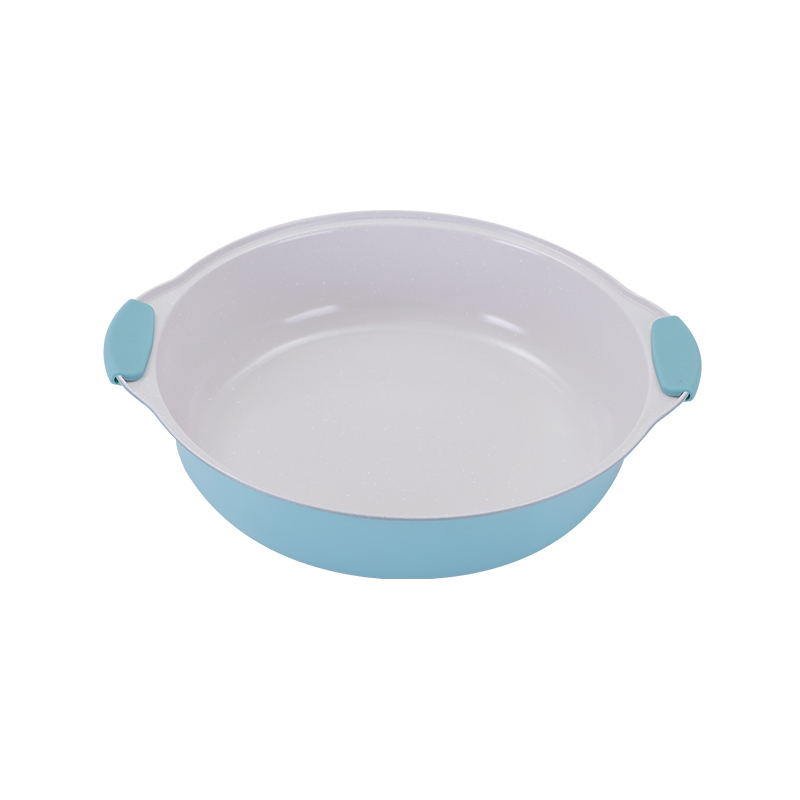
While the tray’s name suggests use for French fries, its applications extend well beyond potato-based dishes. Vegetables, chicken wings, small cuts of meat, and even fish can be roasted using the same tray. The raised edges help contain cooking liquids and reduce mess in both domestic and professional kitchens. Some kitchens report that using multiple trays stacked in compatible ovens allows for higher-volume cooking without increasing total oven time.
Material selection plays a crucial role in performance. Aluminum trays provide rapid, uniform heat conduction, which aids in even browning, while stainless steel options offer durability and resistance to warping under repeated high-temperature use. Non-stick coatings simplify food release and cleaning, but repeated use of metal utensils can reduce coating lifespan. In professional settings, durability is often prioritized over non-stick convenience, while home kitchens may favor easy cleaning and lightweight handling.
Cleaning and maintenance are central considerations. Dishwasher-safe trays are available, though hand washing is recommended for long-term preservation of coatings. Some designs incorporate removable or adjustable racks for airflow optimization, and perforation sizes are chosen to balance even heat exposure with minimal food falling through. Testing shows that foods cooked on perforated trays can reduce absorbed oil by up to 25% compared to conventional baking sheets, which has contributed to their growing popularity among health-conscious cooks.
Temperature control and oven placement are also critical. Chefs advise preheating the oven and placing trays at mid-rack level for uniform cooking. Rotating trays or switching rack positions midway through baking can address minor hot spots and improve browning consistency.
The tray’s versatility extends to both casual home cooking and small-scale commercial operations. Bakeries, cafeterias, and catering services increasingly use these trays for batch roasting of fries, vegetables, or protein items. Their practical design reduces preparation steps, simplifies cleanup, and allows kitchens to maintain consistent product quality. Users also report that using the trays with minimal oil can reduce post-bake grease, improving both flavor and presentation.
Additionally, the trays support organized cooking schedules. Stackable designs and standard oven-compatible dimensions enable multiple batches to be prepared efficiently. Some high-volume kitchens integrate timers and airflow fans to maintain uniform results across large quantities. Recipes for seasoned fries, roasted vegetables, or finger foods all benefit from the tray’s design, emphasizing consistency and texture without extra oil.
Overall, the French Fry Baking Tray combines thoughtful airflow engineering, durable materials, and practical usability to produce crisp, evenly baked foods. Its ability to support both everyday home cooking and commercial operations makes it a versatile tool in modern kitchens, offering efficiency, consistent results, and reduced oil usage.
Frequently Asked Questions
Q: What distinguishes a French fry baking tray from a standard sheet?
A: It has perforations or mesh for improved airflow and even baking.
Q: Can it be used for other foods?
A: Yes, vegetables, chicken, small meats, and fish can also be roasted.
Q: Does it reduce oil use?
A: Yes, perforated trays allow baking with less oil while achieving a crisp texture.
Q: What materials are used?
A: Aluminum for heat conduction and stainless steel for durability; non-stick coatings are also common.
Q: How should it be maintained?
A: Hand wash for long-term coating preservation; some are dishwasher-safe.
Q: Is it suitable for commercial kitchens?
A: Yes, stackable and mid-rack compatible trays help manage high-volume cooking.
Q: How do airflow and tray positioning affect results?
A: Proper placement and rotation ensure even browning and consistent texture across batches.