


 English
  Deutsch
  Español
 Walk into any kitchen supply aisle, and you have probably seen loaf pans stacked up in all kinds of materials, sizes, and price points. Some look sturdy. Others feel thin and flimsy. Picking the wrong one can ruin a perfectly good batch of banana bread or a sandwich loaf that took hours to rise.
A loaf pan seems like a simple piece of bakeware, but the one you choose changes how your bread or cake bakes. Heat moves through it differently. The crust forms differently. Even the internal texture comes out different depending on what material you use. Knowing what to look for saves you from dry edges, sunken centers, or loaves that stick beyond repair.
What a loaf pan actually does during baking
A loaf pan is not just a container. It holds batter or dough in a fixed shape while heat works its way through from all directions. Without the walls of the pan, bread dough would just spread flat on a baking sheet. The pan gives it height and that familiar rectangular form.
The pan also controls how heat reaches the mixture. Heat comes from the bottom and sides, not just the top. That means the loaf pan material directly affects whether your bake turns out even or ends up burned on the outside and raw in the middle. A poorly chosen pan can ruin a recipe that worked fine last week.
Material choices and how they perform
Different materials handle heat differently. There is no single best option. It depends on what you bake and how often.
Aluminum spreads heat evenly across the surface. Good for cakes and quick breads where consistent crumb matters. Lightweight too, but thin aluminum can warp over time with repeated oven use.
Carbon steel heats up fast and holds its shape under high temperature. Great for bread that needs a firm, dark crust. Heavier than aluminum and more durable in the long run.
Non-stick coated steel makes releasing the loaf easy. Cleanup takes half the time. But the coating can scratch or wear out after enough uses, especially if you use metal utensils or abrasive scrubbers.
Stainless steel looks nice and resists rust, but it does not conduct heat as evenly as aluminum or carbon steel. Not the first choice for most bakers.
A loaf pan made from metal generally gives more predictable results than silicone or glass because metal responds quickly to temperature changes and stays rigid throughout the bake.
Why size matters more than you think
Size is not just about how much batter fits. It changes baking time and final texture. This is where a lot of home bakers get tripped up.
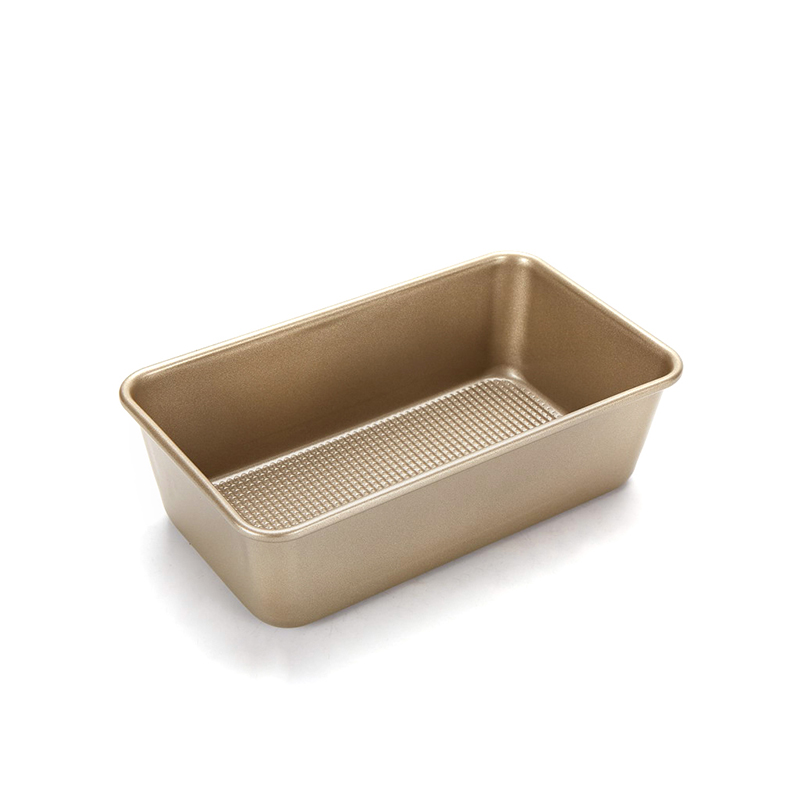
A standard loaf pan size is around 8.5 x 4.5 inches. Most recipes expect that. Go bigger, and the batter spreads thinner. It bakes faster, and the loaf comes out shorter and wider. Go smaller, and the batter piles up higher. The middle takes longer to cook, so the edges can get dry before the center is done.
If you switch to a different loaf pan size, you have to adjust baking time. There is no way around it. Keep the same time, and you will either overbake or underbake every time.
Coating and release performance
Non-stick coating helps, but it is not magic. A good coating means less greasing and easier cleanup. A bad coating means frustration and stuck loaves.
A loaf pan with cheap non-stick will start flaking after a few months. Once the coating goes, everything sticks right there. A better coating costs more upfront but lasts for years with proper care.
Uncoated metal works fine too, but you need to grease it well or line it with parchment paper. Some bakers actually prefer uncoated pans because they develop a natural seasoning over time, similar to cast iron.
Cleaning and keeping it usable
How you clean a loaf pan affects how long it lasts. Non-stick surfaces hate metal utensils and abrasive scrubbers. Use soft sponges and wood or silicone tools. One deep scratch in the coating, and things will start sticking at that exact spot.
Uncoated metal pans need thorough drying after washing. Otherwise, they can rust or oxidize over time, especially carbon steel. A loaf pan that gets proper care can last for years. One that gets abused will end up in the recycling bin after a few months.
Quick selection guide for real use
What do you bake most? Bread needs sturdy carbon steel. Cake does fine with aluminum.
Do you care about easy cleanup? Non-stick helps, but it wears out eventually.
How often do you bake? Daily use needs heavier gauge metal. Occasional use can get away with lighter pans.
Do you follow recipes exactly? Stick with standard 8.5 x 4.5 size to avoid adjusting bake times.
A good loaf pan does not need to be expensive. It just needs to fit how you actually bake. Get that right, and your loaves will come out consistent every time. Get it wrong, and you will be wondering why your banana bread keeps failing for no obvious reason.