


 English
  Deutsch
  Español
 If you have shopped for bakeware, you have seen both brownie pans and brownie trays. They look similar but serve different purposes. A brownie tray is not just a shallow pan. It is designed for even baking, straight edges, and consistent portion sizes. This article explains what a brownie tray actually is, how it differs from a regular pan, and when you should use one.
Defining the Brownie Tray
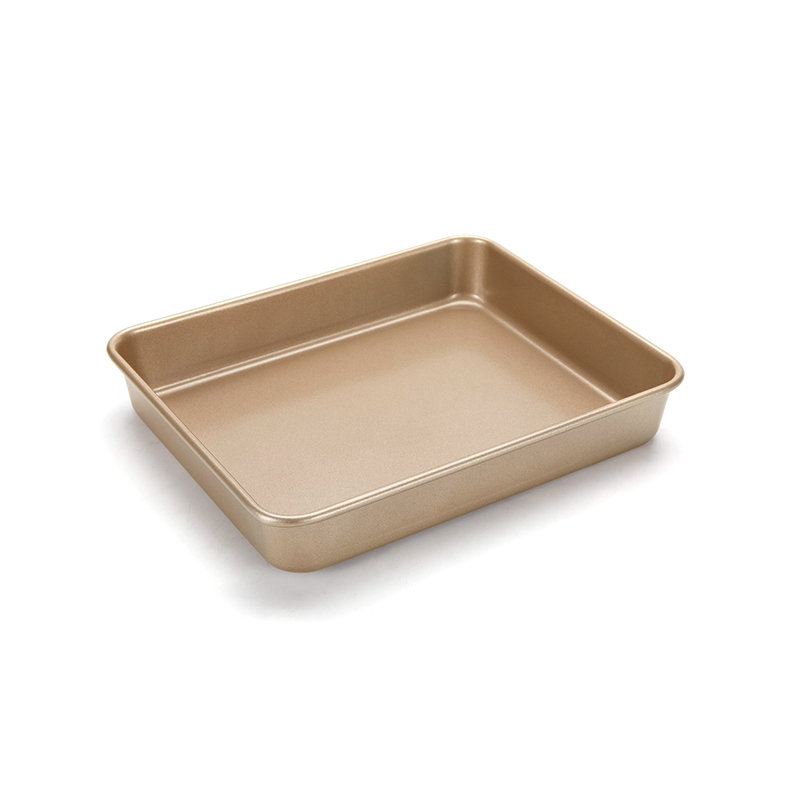
A brownie tray is a rectangular baking vessel with straight vertical walls and sharp 90-degree corners. Unlike standard pans with rounded edges, a brownie tray creates uniform square pieces. The depth is typically one to two inches, which promotes even browning on top and bottom simultaneously.
Most brownie tray models include divider guides. These are subtly raised or etched lines on the bottom showing where to cut. You do not need a ruler or guesswork. Just follow the lines for straight, identical squares.
Material matters, too. A quality brownie tray uses heavy-gauge carbon steel with a rolled rim to prevent warping. Thin metal trays twist in the oven, creating uneven depths where batter pools on one side.
Brownie Tray vs Brownie Pan
|
Feature |
Brownie Tray |
Brownie Pan |
|
Corner shape |
Sharp 90 degrees |
Rounded |
|
Typical depth |
1 to 2 inches |
2 to 3 inches |
|
Divider guides |
Yes |
No |
|
Best for |
Even browning, portion control |
Thick, fudgy brownies |
|
Removal |
Slides out as a slab |
Scooped or cut inside |
A brownie tray excels at producing uniform batches. A standard brownie pan works fine for casual baking, but the tray delivers professional-looking results.
When to Use a Brownie Tray
Four situations call for a brownie tray rather than a regular pan:
- Selling baked goods. Customers expect identical sizes. Divider guides guarantee consistency.
- Making layered bars. The straight walls make pressing and stacking easier.
- Baking for a crowd. A brownie tray produces up to 24 standard squares from one batch.
- Freezing brownies. The slab form stacks neatly without breaking.
For precision and presentation, a brownie tray is the better tool.
What to Look for When Buying
Not every product labeled brownie tray meets the standard. Look for three features:
1. Divider guides: A true brownie tray has lines showing where to cut. They are subtle enough not to imprint on the brownies but visible enough to follow.
2. Rim quality: A quality brownie tray has a rolled wire rim that resists warping. Press on the rim from the side. It should not flex.
3. Coating: The best brownie tray models use a multilayer non-stick coating. Avoid single-layer coatings, which scratch easily and lose performance within months.
Common Mistakes
Even with a good brownie tray, people make errors.
- Overfilling: Fill no more than halfway up the wall. Overfill leads to domed tops and undercooked centers.
- Cutting while hot: Hot brownies crumble at the cut lines. Let the brownie tray cool for 30 minutes before cutting. For the cleanest cuts, chill the slab in the refrigerator for an hour.
- Using metal utensils: Using metal knives or spatulas on a non-stick brownie tray ruins the coating. Always use plastic or silicone knives when cutting inside the tray.
A brownie tray is a specialized tool for even baking and straight, consistent pieces. It differs from a brownie pan by having sharp corners, shallow depth, and divider guides. For bakers who want professional-looking results, a brownie tray is worth the purchase.
Look for heavy-gauge steel, rolled rims, and multilayer non-stick coating. Treat it well, and it will produce perfect squares for years.