


 English
  Deutsch
  Español
 Sourcing teams evaluating a square cake mold for the initial time tend to compare size ranges and finish colors side by side, while the construction details that actually determine field performance — corner tolerance, base thickness consistency, and coating adhesion at flat edges — get far less attention during the early comparison.
Does Corner Tolerance Stay Consistent Across a Production Batch?
A square cake mold relies on precise corner geometry for clean slicing and uniform baking, and even small tolerance drift across a production run can result in some units with slightly rounded or uneven corners mixed into an otherwise consistent batch. Buyers should ask whether corner dimensions are checked per production run or only on an initial approved sample, since drift that develops mid-run on a long production order can slip through if sampling happens only at the start.
Is the Base Thickness Uniform Across the Full Pan Surface?
Base thickness inconsistency creates uneven heat conduction across a square cake mold, which shows up as a cake that bakes faster at thinner spots and slower at thicker ones — a defect that's difficult to diagnose because it looks like an oven problem rather than a pan defect. Buyers should request thickness measurement data from multiple points across the pan base, not just a single center-point reading, since edge and corner thickness can differ meaningfully from the center even within a single unit.
|
Vetting Question |
What a Reliable Supplier Should Confirm |
|
Corner tolerance consistency |
Checked throughout the production run, not only at sampling |
|
Base thickness uniformity |
Measured at multiple points, not just center |
|
Material options available |
Aluminum, stainless steel, or carbon steel cake mold builds matched to use case. |
|
Certification documentation |
BSCI and ISO9001 references specific to the SKU ordered |
Does Material Choice Match the Buyer's Actual End-Use Conditions?
A carbon steel cake mold offers strong heat conductivity and durability for commercial bakery use, while aluminum variants offer lighter weight at somewhat lower heat retention, and stainless steel options trade some heat conductivity for greater corrosion resistance in humid storage conditions. Buyers should match material choice to actual storage and use conditions at the destination market rather than defaulting to whichever material a supplier happens to stock heaviest, since climate and kitchen conditions vary meaningfully between export regions.
Are Perforated Variants Actually Suited to the Intended Recipe Type?
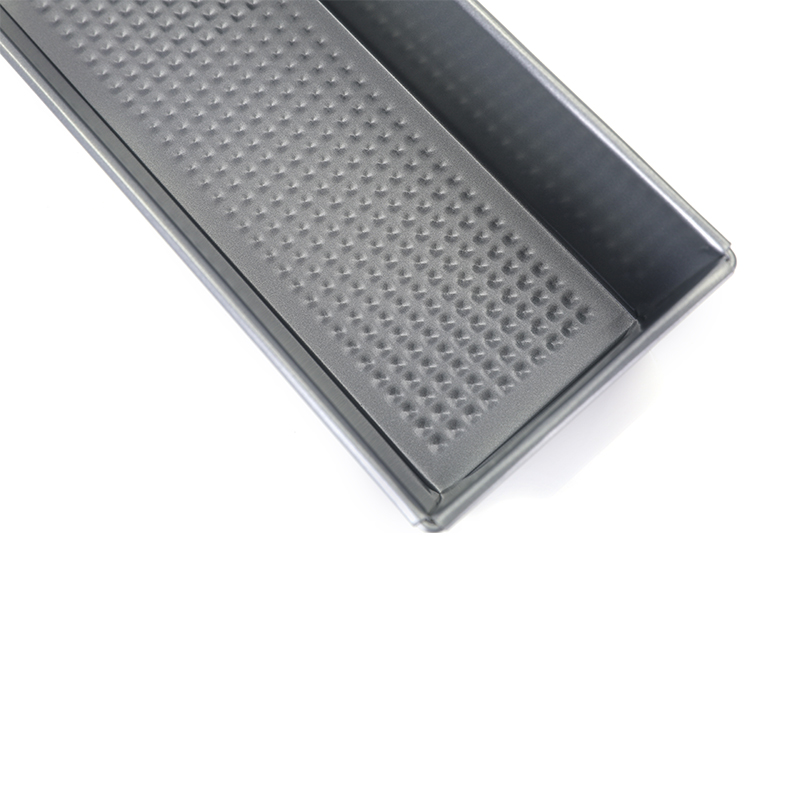
A perforated cake pan variant improves airflow and crust development for certain bread-adjacent bakes but offers no meaningful advantage for standard cake batters, where the perforations simply add manufacturing cost without a corresponding performance benefit. Buyers should confirm which specific recipe applications a perforated square mold is intended for before adding it to a catalog lineup, rather than assuming perforation is a universal upgrade over a solid-base design.
Can the Supplier Document BSCI and ISO Certification at the SKU Level?
A custom bakeware manufacturer claiming general factory-level certification for a square cake mold program should still be able to confirm that a specific SKU falls within the certified production scope, since certification sometimes covers certain product lines or facilities but not every single item in a broad catalog. Buyers importing into markets with retailer compliance requirements should request SKU-specific confirmation from a BSCI-certified factory rather than accepting a general certificate that doesn't clearly map to the exact product being ordered.
How Should Storage Guidance Factor Into a Bulk Order Decision?
Square cake molds stacked while still damp are prone to developing rust spots between units, particularly on carbon steel variants, and this detail matters for buyers advising downstream retail customers on proper care. A supplier providing clear storage and stacking guidance alongside the product — rather than leaving buyers to discover storage sensitivities through return complaints — reduces the volume of avoidable quality complaints that surface after products have already reached end users.
Does the Supplier Offer Consistent Sizing Across a Full Size Range?
A square cake mold line spanning small 6-inch pans through large 12-inch pans should maintain proportional wall height and base thickness relationships across that whole range, rather than treating each size as an independently scaled mold with its own inconsistent proportions. Buyers standardizing a multi-size product line for retail should ask whether the full size range shares consistent design proportions, since mismatched proportions between sizes can create confusing baking-time guidance for end customers using different sizes from the same product family.
How Does the Supplier Handle Non-Stick Coating on Perforated Surfaces?
Applying a non-stick coating evenly across a perforated surface is more difficult than coating a solid base, since the coating needs to bond around each perforation edge without pooling or leaving thin spots at the hole boundaries. A square cake mold with perforations that hasn't been coated with this specific challenge in mind can develop coating failure concentrated right at the perforation edges, well before the rest of the pan surface shows comparable wear. Buyers ordering perforated variants should ask suppliers directly how coating application is adapted for perforated geometry rather than assuming the same process used on solid pans transfers without adjustment.