


 English
  Deutsch
  Español
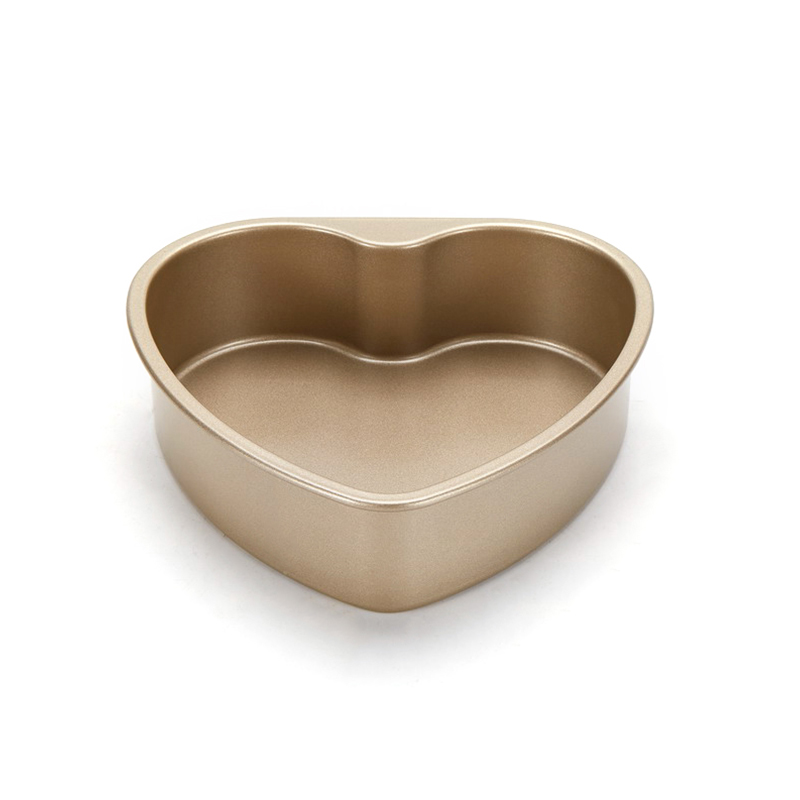
 In the bakeware market, heart shaped bakeware continues to attract attention across different user groups. It is no longer limited to specific occasions—many buyers now consider heart shaped bakeware as a regular part of their baking toolkit. This growing demand is closely tied to improvements in design, material selection, and overall usability.
What Makes the Design More Complex?
Compared with standard round or square pans, heart shaped bakeware introduces structural challenges that directly affect baking results.
The pointed bottom area tends to absorb heat faster, which can create uneven baking if not properly managed. To address this, manufacturers often apply a variable thickness design, slightly reinforcing the tip area to slow down heat transfer.
The inner curved section at the top also plays a role. Without smooth transitions, cakes may stick or break during removal. High-quality heart shaped bakeware uses rounded internal edges to improve release and maintain shape integrity.
Coating application is another key factor. Because of the unique geometry, achieving uniform coverage requires more precise processing. A dual-layer coating system is often used to provide consistent nonstick performance.
Which Material Works Better?
Material choice directly influences how heart shaped bakeware performs in different baking environments.
|
Material |
Suitability |
Advantages |
Limitations |
|
Carbon Steel |
High |
Strong structure, even heating, stable shape |
Slightly heavier |
|
Aluminum |
Medium-High |
Lightweight, fast heat response |
Easier to deform at edges |
|
Silicone |
Medium |
Flexible, easy release |
Less defined shape, weaker browning |
For applications where shape clarity and surface finish matter, carbon steel heart shaped bakeware with a nonstick coating is often selected. Silicone options are more suitable for cold desserts or recipes that do not require browning.
How to Choose the Right Size?
Different baking needs require different sizes of heart shaped bakeware.
|
Type |
Typical Size |
Capacity |
Application |
|
Shallow Pan |
25×23×3 cm |
~800 ml |
Brownies, cookies |
|
Standard Cake Pan |
20×18×6 cm |
1.2–1.8 L |
Sponge cakes, layered cakes |
|
Deep Mold |
18×16×8 cm |
1.5–2.5 L |
Mousse, chilled desserts |
Before purchasing, it is important to confirm that the oven can accommodate the widest part of the heart shaped bakeware, leaving enough space for proper airflow.
Does Coating Really Matter?
The coating used on heart shaped bakeware affects both baking results and long-term durability.
|
Coating Type |
Release |
Heat Limit |
Lifespan |
Use Scenario |
|
PTFE Nonstick |
Easy |
Up to 230°C |
2–4 years |
Sticky batters, frequent baking |
|
Ceramic |
Moderate |
260°C+ |
1–2 years |
Higher temperature use |
|
Enamel |
Moderate |
300°C+ |
Long-term |
Bread and heavier recipes |
Due to the more complex shape, heart shaped bakeware benefits from coatings that support smooth release, especially around curved and pointed areas.
How to Use It More Effectively?
To achieve consistent results with heart shaped bakeware, a few practical details should not be overlooked.
Filling the mold to around 60–70% helps maintain the finishing shape. Too much batter can overflow and distort the heart outline, while too little may leave gaps.
After baking, allowing a short cooling period improves release. Gentle separation along the edges can reduce the risk of damage.
Cleaning should be done using soft materials to avoid damaging the coating. Proper storage also helps extend the usable life of heart shaped bakeware.
Why Is It Still Widely Used?
The continued use of heart shaped bakeware is linked to its ability to combine visual appeal with functional performance. It offers a recognizable form while meeting practical baking needs.
As manufacturing processes continue to improve, heart shaped bakeware is becoming more consistent in performance, making it suitable for both everyday baking and special presentations.