


 English
  Deutsch
  Español
 In large-capacity baking, few tools face as much stress as a turkey roasting pan. It needs to carry heavy loads, withstand high oven temperatures, and maintain its shape over several hours. Yet, many users find that a turkey roasting pan can warp during use. This is not accidental—it usually comes down to material choice, structural design, and coating performance.
Material Matters More Than Expected
The core reason a turkey roasting pan warps often starts with the base material. Different metals behave very differently under heat and load.
|
Material |
Heat Conductivity |
Deformation Resistance |
Weight |
Cost |
Suitability |
|
Carbon Steel |
Medium |
Strong |
Heavy |
Medium |
High |
|
Aluminum |
Fast |
Weak |
Light |
Low |
Limited |
|
Stainless Steel |
Slow |
Strong |
Heavy |
High |
Moderate |
Carbon steel has become widely used in turkey roasting pan production because it balances strength and thermal stability. Its lower thermal expansion rate helps reduce shape distortion under high temperatures. In contrast, aluminum heats quickly but expands more, making it easier for a turkey roasting pan to bend or warp.
Thickness is another key factor. A turkey roasting pan with less than 0.8mm thickness is more likely to deform. Increasing thickness improves rigidity and helps maintain structure during long roasting cycles.
Structural Design Plays a Critical Role
Even with good material, poor design can still cause a turkey roasting pan to fail under pressure.
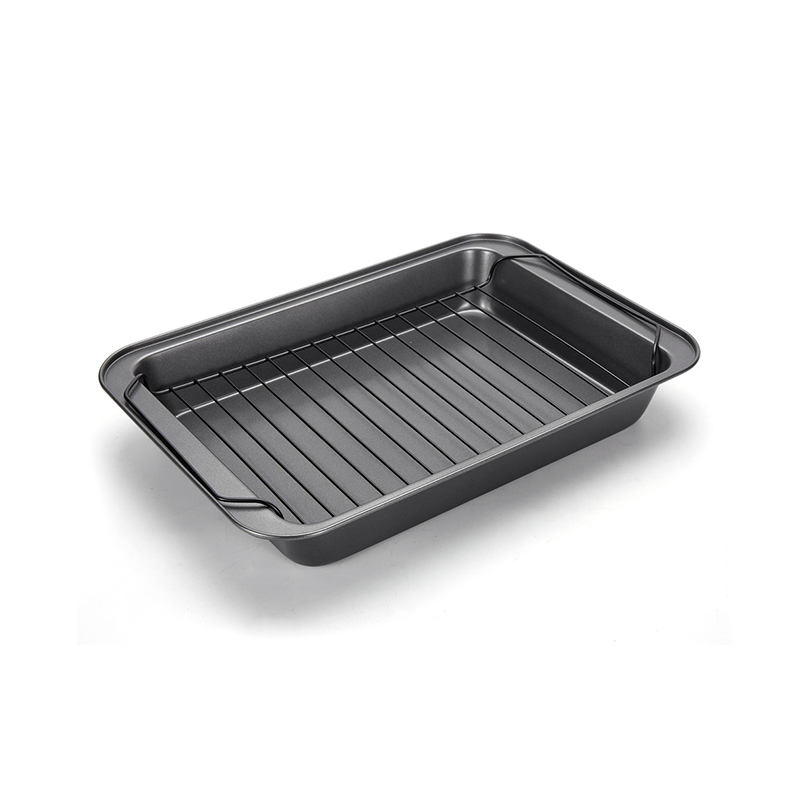
A well-designed turkey roasting pan usually features slightly angled side walls. This helps balance internal capacity with better airflow, ensuring even cooking while maintaining structural strength.
Handling construction is equally important. Integrated handles formed from a single sheet of metal provide greater reliability compared to welded or riveted options. When lifting a fully loaded turkey roasting pan, stability becomes essential for both performance and handling.
Reinforcement patterns on the basis also make a difference. Many large turkey roasting pan designs include embossed ribs or grid patterns. These increase resistance to bending, especially when holding heavy food and hot liquids.
Coating Affects Durability and Performance
The coating on a turkey roasting pan is not just about easy cleaning—it also impacts how the pan handles heat, moisture, and acidic ingredients.
|
Coating Type |
Heat Resistance |
Durability |
Cleaning |
Application |
|
PTFE Nonstick |
Up to 230°C |
Medium |
Easy |
General roasting |
|
Ceramic |
260°C+ |
Lower |
Moderate |
High-temperature use |
|
Enamel |
300°C+ |
Long |
Moderate |
Heavy-duty roasting |
Enamel coatings are often preferred for a turkey roasting pan because they provide strong resistance to acids, salt, and prolonged heat exposure. This makes them suitable for roasting with marinades or citrus-based preparations.
Why a Rack Improves Results
Many users overlook the importance of a rack inside a turkey roasting pan, but it plays a key role in both cooking performance and pan protection.
A rack lifts the turkey above the base, allowing hot air to circulate evenly. This reduces direct contact between the meat and accumulated juices, preventing soggy textures. It also reduces localized stress on the bottom surface of the turkey roasting pan, helping maintain its shape during long cooking times.
Additionally, a removable rack makes it easier to handle the food after cooking, reducing the need to tilt or strain the turkey roasting pan.
Choosing the Right Size
Size selection also affects how a turkey roasting pan performs.
|
Oven Capacity |
Recommended Pan Size |
Suitable Weight |
|
30–40L |
35×27×8 cm |
3–5 kg |
|
45–60L |
40×30×9 cm |
5–7 kg |
|
65L+ |
45×35×10 cm |
7–10 kg |
A turkey roasting pan that is too large for the oven can restrict airflow, while one that is too small may bring about overcrowding. Both situations increase the risk of uneven heating and structural stress.
Safe Use and Maintenance
Proper handling can extend the life of a turkey roasting pan and reduce the chance of warping.
Avoid sudden temperature changes, such as placing a hot pan under cold water. This rapid contraction can weaken the structure over time. Cleaning should be done after the turkey roasting pan has cooled naturally.
When lifting, always support both sides evenly. A fully loaded turkey roasting pan can exceed several kilograms, and uneven force may contribute to long-term deformation.
Storage also matters. Keeping the turkey roasting pan flat and unstacked helps preserve its original shape.
A turkey roasting pan warps in the oven mainly due to material limitations, insufficient thickness, or weak structural design. By choosing carbon steel construction, reinforced bases, and durable coatings, users can significantly reduce this risk.
With the right combination of design and material, a turkey roasting pan can handle repeated high-temperature use while maintaining consistent performance.