


 English
  Deutsch
  Español
 The baguette baking tray has become an essential tool for home bakers seeking to create consistent, high-quality French bread. While professional bakeries often rely on stone ovens and steam injection to achieve the perfect crust and crumb, modern baguette trays provide a practical alternative for domestic kitchens, offering both structure and heat control.
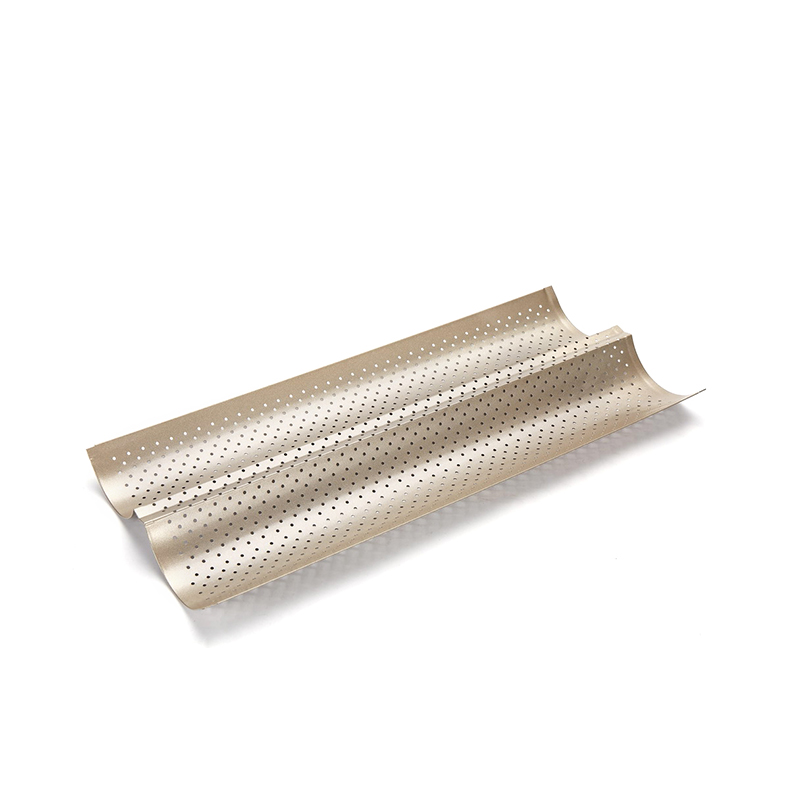
Baguette trays are typically designed with individual loaf channels, and many feature small perforations on the bottom. These perforations allow heat to circulate and moisture to escape during baking, helping to produce a crisp crust and evenly browned loaves. The tray's material also influences baking outcomes. Non-stick coatings and heavy-gauge steel options are popular among home bakers, as they provide durability and even heat distribution. Ceramic trays are also available and are praised for their thermal stability, which can help maintain a uniform baking temperature.
For home users, the tray simplifies the process of shaping and supporting baguettes during proofing and baking. Some bakers find it particularly useful when working with high-hydration doughs, which can be challenging to shape and transfer without losing their structure. The tray also helps maintain loaf consistency, which is especially valuable for beginners who are developing their baking skills. Many users report that using a tray reduces the likelihood of dough spreading too widely or collapsing, producing more uniform and aesthetically pleasing bread.
Despite these advantages, the use of a baguette baking tray requires attention to technique. Sticking is a common concern, particularly with wet doughs. To prevent this, bakers often dust the tray with flour or rice flour before placing the dough. Some also use parchment paper or non-stick coatings to improve loaf release. Allowing the dough to rest briefly before placing it in the tray can also help it maintain its shape during baking.
In addition to improving loaf structure, the tray contributes to the development of a balanced crust. Proper heat circulation allows the surface of the bread to dry slightly, promoting a golden exterior without compromising the softness inside. Baking temperature and timing should be adjusted according to tray material and loaf size, as heavier trays may require slightly longer preheating for optimal results. Using the tray alongside other baking methods, such as preheated stones or steam-infused ovens, can further enhance the texture and flavor of the bread.
Home bakers also appreciate the tray’s convenience for batch baking. Multi-channel trays allow several loaves to be baked simultaneously, which is particularly useful for households that consume bread regularly or for bakers preparing bread for gatherings. The tray’s structure ensures that each loaf receives similar heat exposure, reducing variation between loaves and making the baking process more predictable.
In summary, the baguette baking tray combines functional design with practical benefits for home bakers. Its perforated channels, heat-conductive material, and support for dough structure make it a versatile tool for achieving consistent results. While professional techniques can yield similar outcomes without a tray, many bakers find it invaluable for creating uniform, high-quality bread with a crisp crust and tender interior.
FAQ
Q: What is the main advantage of a baguette baking tray?
A: It provides structure for shaping dough, ensures even heat distribution, and promotes a crisp crust.
Q: Can I bake baguettes without a tray?
A: Yes. Alternative methods like parchment, baking stones, or couche cloths can also produce good results, but trays simplify shaping and baking.
Q: How can sticking be prevented?
A: Dusting the tray with flour or rice flour, using parchment paper, and allowing the dough to rest briefly before baking can help.
Q: Are high-end trays necessary?
A: Premium trays offer better material quality and heat retention, but many affordable trays work well for home baking.